
Dual fuel generators: gas vs. propane
A dual fuel generator runs on gasoline or propane at the turn of a selector. Each fuel has clear strengths, and knowing them helps you plan storage, runtime and outage logistics.
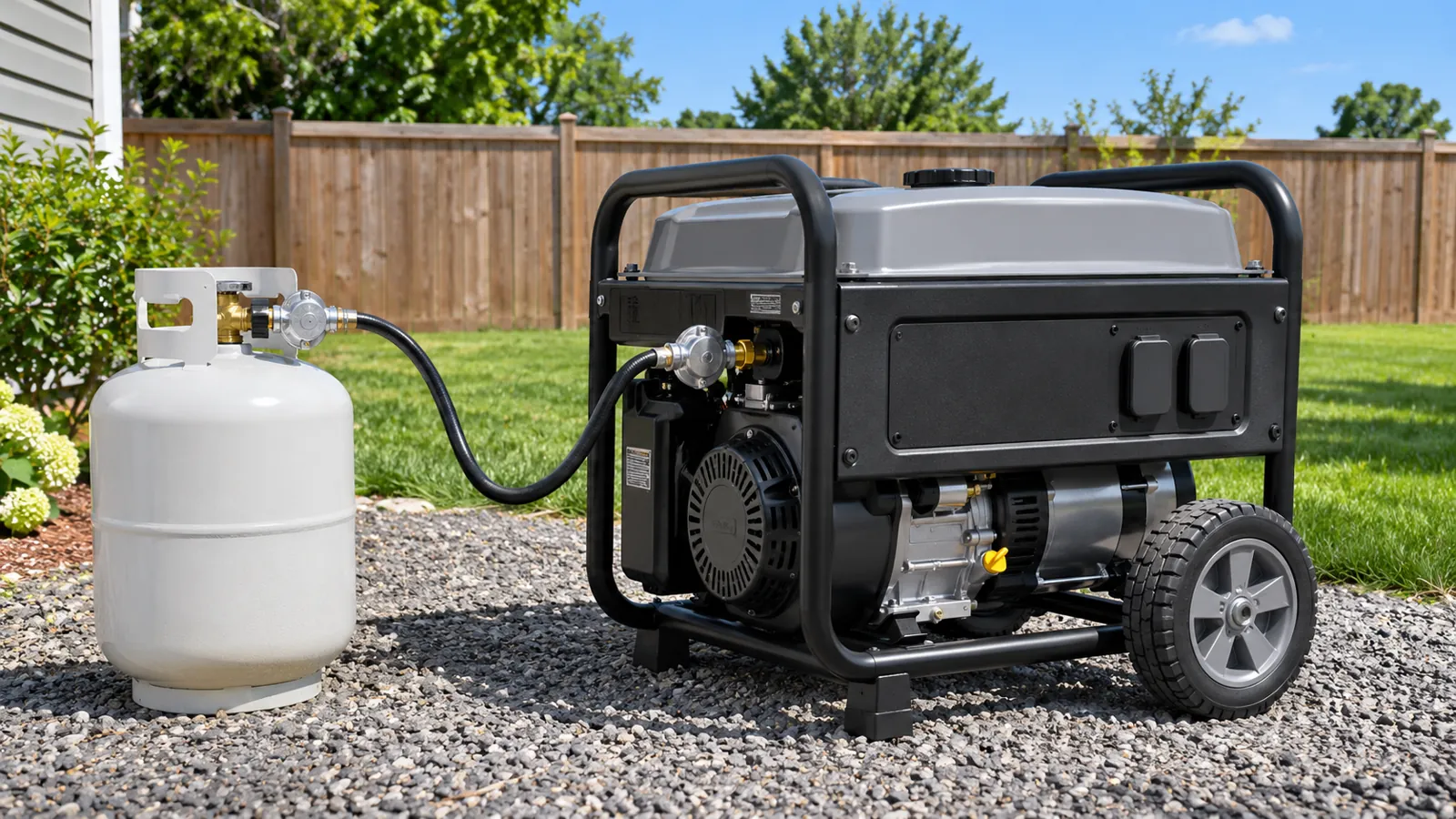
What dual fuel means
A dual fuel generator has a standard carburetor for gasoline plus a regulator and hose inlet for propane (LP) from a standard 20 lb or larger cylinder. You choose the fuel with a selector knob; many models can switch while running. A tri-fuel model adds a natural gas inlet. See the dual fuel picks and the tri-fuel picks.
Output: propane delivers a bit less
Propane carries less energy per gallon than gasoline, roughly 91,500 BTU vs. about 114,000-120,000 BTU. Engines tuned for both fuels typically lose around 10% of output on propane, sometimes 5-15% depending on the model. A generator rated 9,500 running watts on gas might list 8,500 W on propane.
Always size your loads against the propane rating if propane will be your main outage fuel. The sizing guide explains how.
Storage: where propane shines
| Gasoline | Propane | |
|---|---|---|
| Shelf life | about 30 days untreated, up to 12-24 months with stabilizer (per the product label) | does not degrade |
| Availability after a storm | stations need power and deliveries | exchange cages, refill stations, home tanks |
| Carburetor gumming | yes, if left in the fuel system | no |
| Storage | approved cans, a few gallons, away from the house | cylinders upright, outdoors, never indoors |
| Energy per gallon | higher | about 20-25% lower |
Stale gasoline is the leading reason generators refuse to start after months in a shed. Propane removes that risk, which is the main argument for dual fuel in a home backup unit that may sit unused for a year.
Our picks for this guide
The highest-rated models in our comparison for this topic.
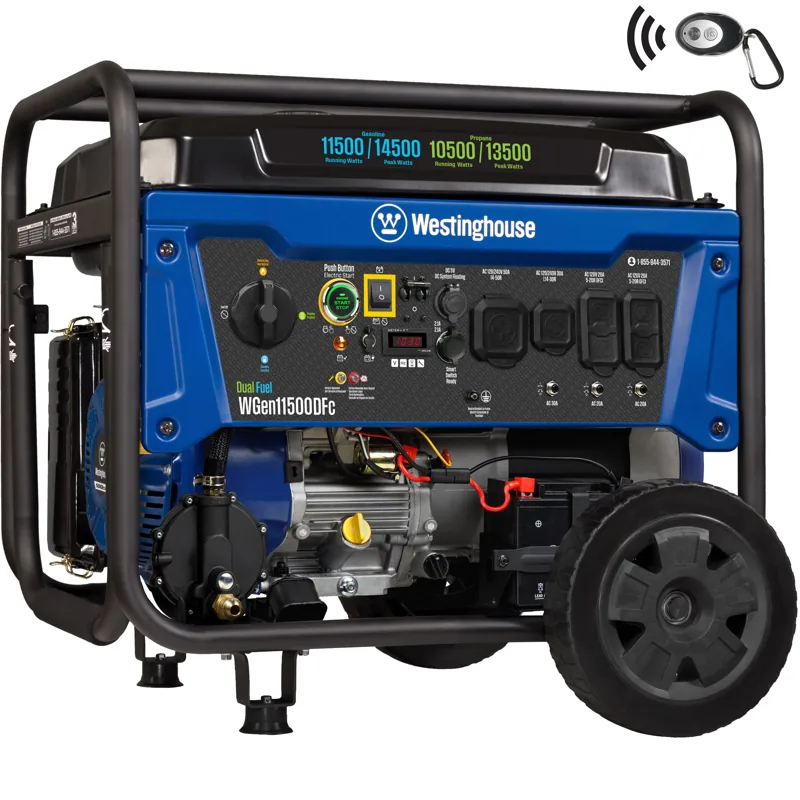 Westinghouse WGen11500DFc
8.3/10 · $1,200–$1,800
11,500 running W · Dual fuel
Top pick
Check price
Read the review →
As an Amazon Associate we earn from qualifying purchases, at no extra cost to you.
Runtime math with a 20 lb tank
A standard "20 lb" barbecue cylinder holds about 4.7 gallons of propane when full (filled to roughly 80% for safety). Energy-wise, that is close to 3.6-3.8 gallons of gasoline.
Typical manufacturer figures on a 20 lb tank:
| Generator size | Quarter load | Half load |
|---|---|---|
| 2,000-3,000 W dual fuel inverter | 12-20 h | 7-12 h |
| 3,500-4,500 W open frame | 8-12 h | 5-8 h |
| 7,500-9,500 W open frame | 5-8 h | 3-5 h |
For a multi-day outage, plan on several 20 lb tanks or a larger cylinder. A 100 lb cylinder (about 23.6 gallons) holds five times as much; an extended-run hose from a home tank needs a proper regulator and fittings, installed by a qualified gas technician. Read the runtime guide for full outage math.
Cold weather
Propane boils at about -44 °F, but a cylinder's pressure, and therefore how much vapor it can deliver, drops sharply as temperatures fall. A 20 lb tank feeding a large generator under heavy load can frost over and starve the engine below about 20 °F. Fixes: use a larger cylinder (more surface area), connect two tanks, keep the load moderate, and never apply direct heat to a cylinder. Gasoline engines can also be harder to start in the cold; follow the manual for winter oil viscosity.
Ethanol in gasoline
Most US pump gas contains up to 10% ethanol (E10). Small engines tolerate E10, but ethanol absorbs water and accelerates fuel breakdown. Rules:
- Never use E15, E85 or any blend above E10 in a generator; it can damage the engine and void the warranty.
- Use ethanol-free gas when available for long storage.
- Add stabilizer to every can you fill, and rotate the stock every few months.
Natural gas and tri-fuel
Natural gas never runs out during most outages and needs no storage, but a tri-fuel portable usually loses 20-25% of its gasoline output on natural gas. The connection requires a dedicated shutoff valve and a rated quick-connect outlet on the house supply, installed by a licensed plumber or gas fitter, often with a permit. Never improvise a natural gas hookup.
Gas or propane: how to decide
- Home backup that sits for months: propane as the main fuel, gasoline as a backup.
- Camping and RVs with an onboard propane tank: propane avoids carrying gas cans; a qualified RV technician can add a proper outlet.
- Maximum output per gallon: gasoline.
- Cold climates: gasoline, or propane with larger cylinders.
Whatever the fuel, the carbon monoxide safety rules are identical: propane exhaust contains carbon monoxide too. Quiet propane-capable options are in the dual fuel inverter picks.
Our pick for this guide
- Best dual fuel generators (80 models)
- Best dual fuel inverter generators (46 models)
- Best tri fuel generators (25 models)
- Best portable generator for home backup (68 models)
Frequently asked questions
Does a generator produce less power on propane?
Yes, typically around 10% less, sometimes 5% to 15% depending on the engine. Check the separate propane rating on the spec sheet and size your loads against it.
How long will a generator run on a 20 lb propane tank?
A mid-size 3,500 to 4,500 W generator usually runs 8 to 12 hours at quarter load and 5 to 8 hours at half load. Larger open frames drain a 20 lb tank in roughly 3 to 8 hours.
Is propane safer than gasoline in a generator?
Propane stores better and does not spill or go stale, but its exhaust still contains deadly carbon monoxide. The same outdoor placement and distance rules apply to both fuels.