
Generator safety: carbon monoxide, placement and electrical risks
A portable generator is safe only when it runs far from where people breathe and is connected the right way. These rules prevent the two leading causes of generator deaths: carbon monoxide and electrocution.
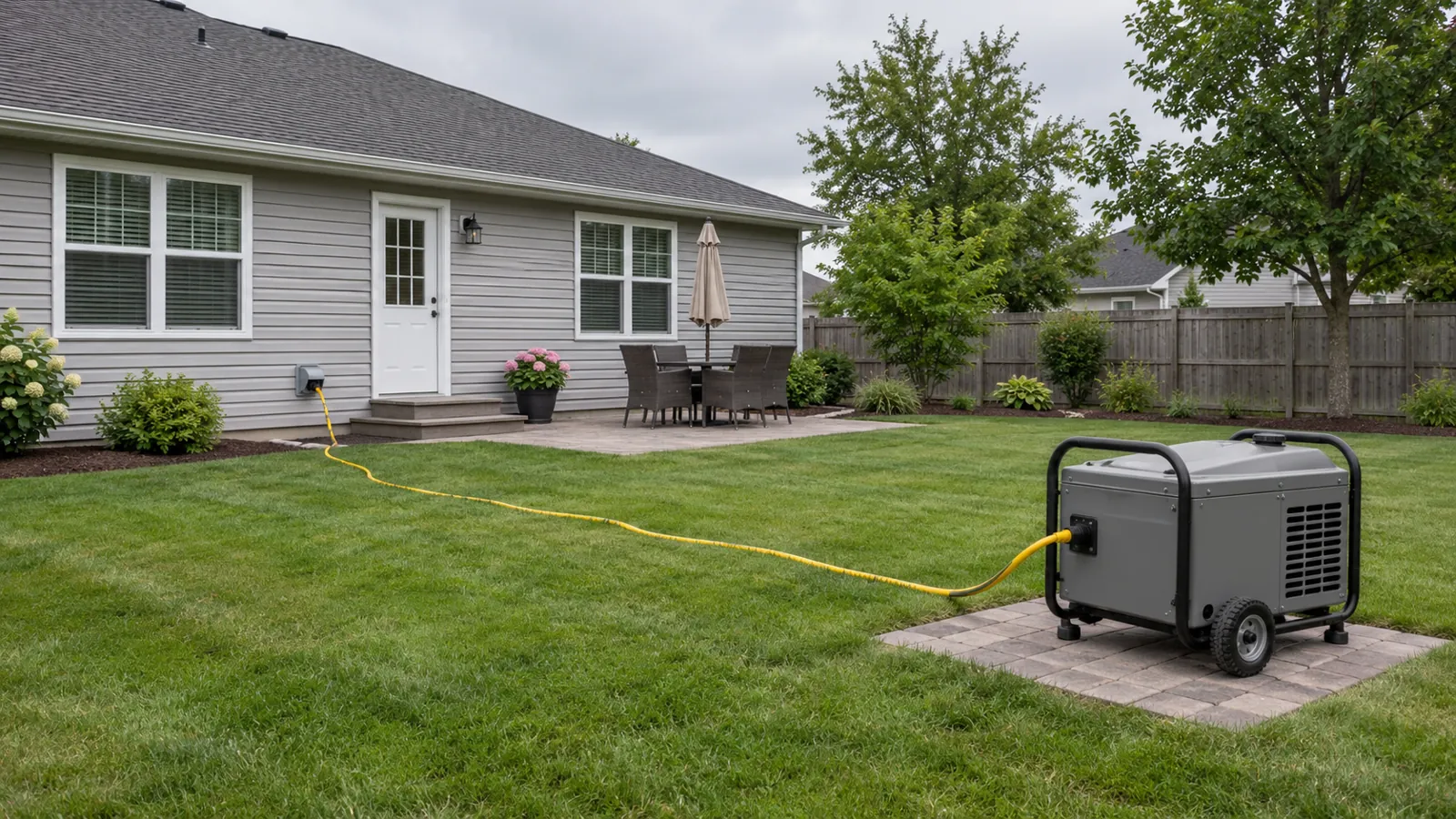
Carbon monoxide: the invisible killer
A portable generator's exhaust contains carbon monoxide (CO), a gas you cannot see, smell or taste. A single generator can produce as much CO as hundreds of idling cars. Every year, people die after storms because a generator ran in a garage, a basement or next to an open window. Symptoms (headache, dizziness, nausea, weakness, confusion) are easy to mistake for the flu or fatigue, and a sleeping person may never notice them.
If anyone feels sick, dizzy or weak while a generator is running, get everyone into fresh air immediately and call 911.
Where to place the generator
- Never indoors: not in the house, a garage (even with the door open), a basement, a crawl space, a shed, a carport or any enclosed or partly enclosed area. Opening doors and windows or running fans does not make it safe.
- At least 20 feet from the house, farther if you can, with the exhaust pointed away from the home and from your neighbors' homes.
- Away from windows, doors, vents and air intakes, including the intakes of furnaces, dryers and crawl spaces.
- On a flat, dry surface, outdoors, with several feet of open space on all sides for cooling.
- Not in an RV, a camper, a tent or a vehicle compartment unless the generator was designed and installed there by the manufacturer.
CO alarms inside the home
Install battery-powered or battery-backup CO alarms on every level of the home and outside sleeping areas, following the manufacturer's placement instructions. Plug-in alarms without a battery stop working the moment utility power fails, exactly when you need them. Check them before storm season and replace them at the end of their rated life, typically 7 to 10 years.
Our picks for this guide
The highest-rated models in our comparison for this topic.
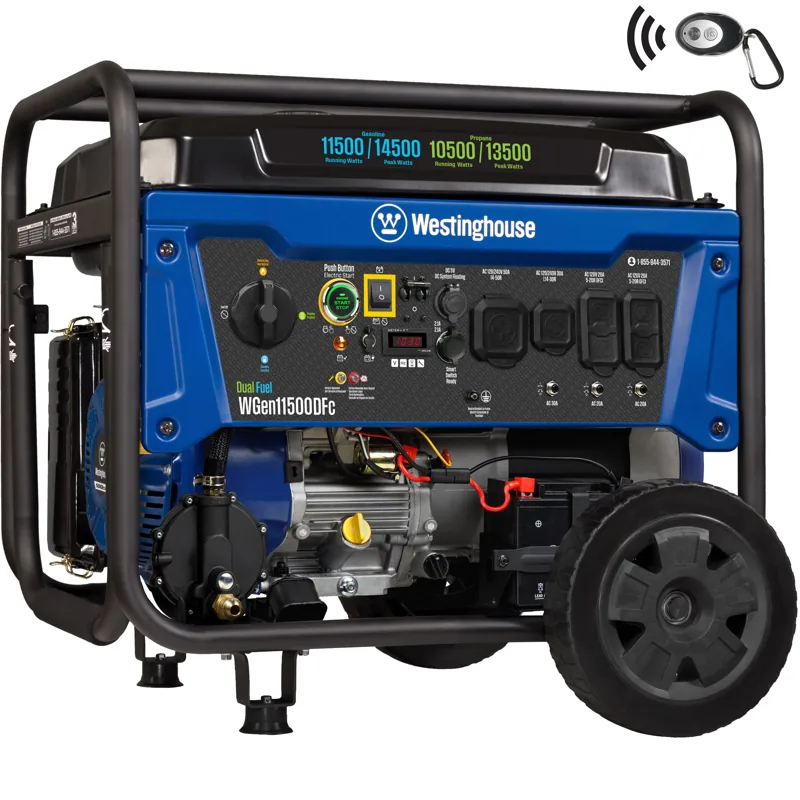 Westinghouse WGen11500DFc
8.3/10 · $1,200–$1,800
11,500 running W · Dual fuel
Top pick
Check price
Read the review →
As an Amazon Associate we earn from qualifying purchases, at no extra cost to you.
CO shutoff sensors: a backup, not a permission
Many current generators include a CO sensor that shuts the engine off when carbon monoxide builds up around the unit; brands market them under various names. Industry safety standards (ANSI/PGMA G300 and UL 2201) define how these systems and lower-emission engines should perform. See the CO sensor picks.
These systems reduce risk, but they do not make it safe to run a generator closer to the house, in a garage or near a window. CO can still drift indoors before the sensor near the generator reacts. Distance, exhaust direction and indoor CO alarms remain mandatory.
Electrical safety: never backfeed
Never plug a generator into a wall outlet with a double-male cord (sometimes called a "suicide cord"). This is called backfeeding. It sends power back through your service into the utility lines, where the transformer steps it up to thousands of volts and can electrocute line workers restoring power. It also exposes you to shock, can damage the generator and wiring, and can start a fire when utility power returns.
The only safe ways to power house circuits:
- a transfer switch (manual or automatic), or
- a UL-listed interlock kit paired with a power inlet box,
installed by a licensed electrician, with a permit and inspection where your local code requires it. The connection guide explains each option.
Without one of these, plug appliances directly into the generator using heavy-duty outdoor extension cords.
Extension cords
- Use outdoor-rated, heavy-gauge cords (12-gauge for most 15-20 A loads, 10-gauge for long runs or heavy loads) in good condition, with no cuts, missing ground pins or taped repairs.
- Keep runs as short as the 20-foot minimum distance allows; 25 to 50 feet is typical.
- Do not run cords under rugs or through windows that then cannot close; do not daisy-chain cords.
Wet weather
Never run a generator in rain, snow or standing water unprotected, and never touch it with wet hands. Use a canopy or tent designed specifically for running generators, which keeps water off while leaving the sides open for airflow and exhaust. Do not build a closed box or put the generator under a porch roof or deck near the house.
Grounding
Follow the owner's manual and local code on grounding. Many portable generators do not need a separate ground rod when they power appliances through cords, while a connection to house wiring is grounded through the transfer equipment. If in doubt, ask a licensed electrician.
Refueling and fuel storage
- Shut the generator off and let it cool before refueling; gasoline spilled on a hot muffler can ignite.
- Refuel outdoors, never near a flame or pilot light, and wipe up spills.
- Store gasoline in approved, labeled fuel cans, away from the house, in a cool, ventilated place, and never near living spaces or fuel-burning appliances.
- Store propane cylinders upright and outdoors.
Before every outage
- Read the manual and know where the CO shutoff, circuit breakers and fuel valve are.
- Check that CO alarms work and that cords and the canopy are ready.
- Decide where the generator will sit (at least 20 feet away, exhaust away from the house) before the storm, not in the dark.
Running maintenance is covered in the maintenance guide; our methodology explains how safety features weigh in each score.
Our pick for this guide
- Best generator with a CO shutoff sensor (129 models)
- Best portable generator for home backup (68 models)
- Best portable generators of 2026: our ratings (174 models)
Frequently asked questions
How far from the house should a generator be?
At least 20 feet, with the exhaust pointed away from the house and away from windows, doors and vents. Farther is better, and indoor battery-powered CO alarms are still essential.
Can I run a generator in my garage with the door open?
No. Carbon monoxide builds up quickly in a garage even with the door open and can seep into the house. Run the generator outdoors only, at least 20 feet from the home.
Can I plug my generator into a wall outlet?
No. Backfeeding through an outlet with a double-male cord can electrocute utility workers and start a fire. Use a transfer switch or a UL-listed interlock kit installed by a licensed electrician.