
What size generator do I need?
Generator sizing comes down to two numbers per appliance and one simple rule. Fill in the worksheet below and you will know whether you need 3,500, 7,500 or 12,000 watts.
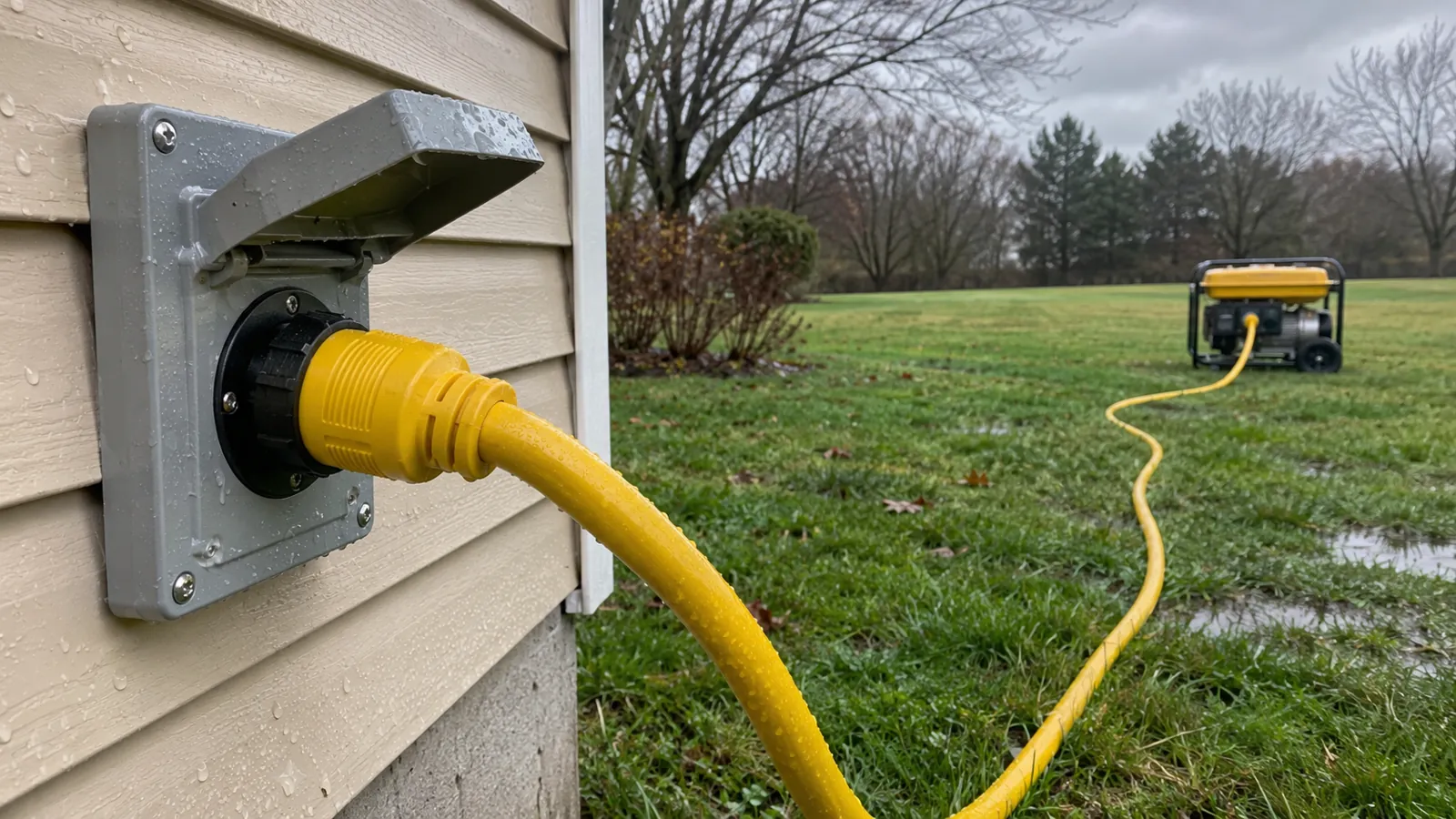
Running watts vs. starting watts
Every appliance has a running wattage, the power it draws once it is up and running. Anything with an electric motor or a compressor (fridge, freezer, sump pump, well pump, furnace blower, air conditioner, air compressor, power saw) also needs a short starting surge, often two to three times its running watts, for a second or two while the motor spins up.
A generator mirrors this with two ratings: running (rated) watts, which it can hold for hours, and starting (surge) watts, which it can deliver briefly. You need both to be large enough.
Typical wattage of US appliances
The figures below are typical ranges; your appliance's data plate always wins.
| Appliance | Running watts | Starting watts |
|---|---|---|
| Refrigerator (full size) | 600-800 W | 1,800-2,200 W |
| Chest or upright freezer | 500-700 W | 1,500-2,000 W |
| Sump pump, 1/2 HP | 1,000-1,100 W | 2,000-2,200 W |
| Well pump, 1 HP, 240 V | 1,500-2,000 W | 3,500-4,500 W |
| Furnace blower, 1/2 HP | 700-900 W | 2,000-2,400 W |
| Window AC, 10,000 BTU | 1,000-1,200 W | 3,000-3,600 W |
| Central AC, 3-ton (36,000 BTU), 240 V | 3,500-4,000 W | 9,000-12,000 W (much less with a soft starter) |
| Microwave, 1,000 W | 1,000-1,500 W | no surge |
| Electric space heater, high setting | 1,500 W | no surge |
| Oil-filled portable heater | 700-1,500 W | no surge |
| LED lights, 10 bulbs | 80-100 W | no surge |
| TV, 55 in LED | 100-150 W | no surge |
| Wi-Fi router + modem | 15-25 W | no surge |
| CPAP (with heated humidifier) | 30-90 W | no surge |
| Circular saw, 7-1/4 in | 1,200-1,400 W | 2,300-2,500 W |
| Air compressor, 1 HP | 1,500-1,600 W | 4,000-4,500 W |
Heating elements (space heaters, coffee makers, toasters, hair dryers) have no surge but a high, steady draw: one 1,500 W space heater uses as much as two refrigerators.
Our picks for this guide
The highest-rated models in our comparison for this topic.
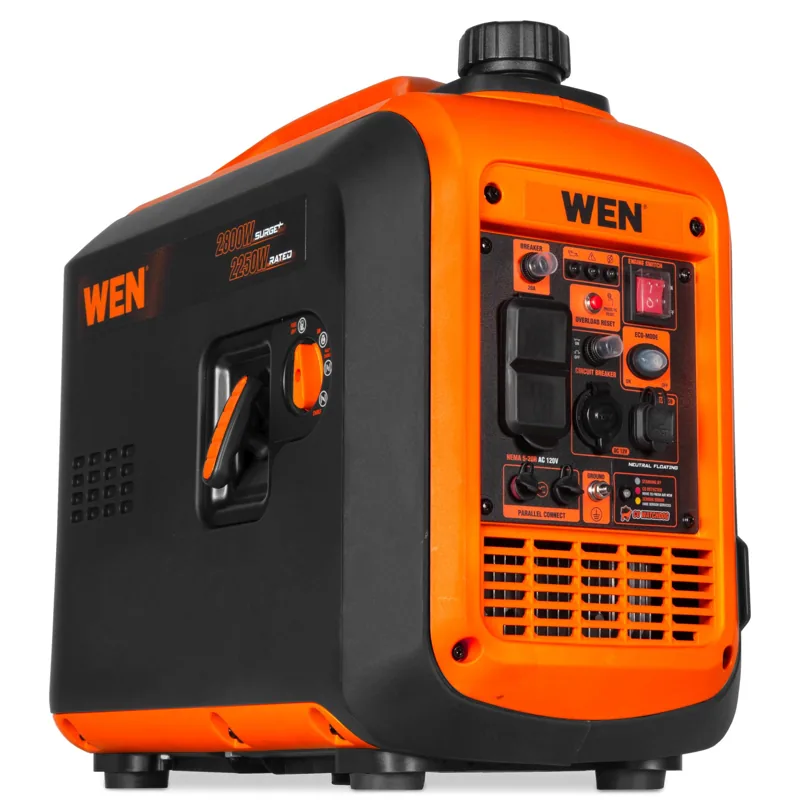 WEN 56280iX 2800W Inverter with CO Watchdog
7.1/10 · $300–$500
2,250 running W · Gas inverter
Easy to carry
Check price
Read the review →
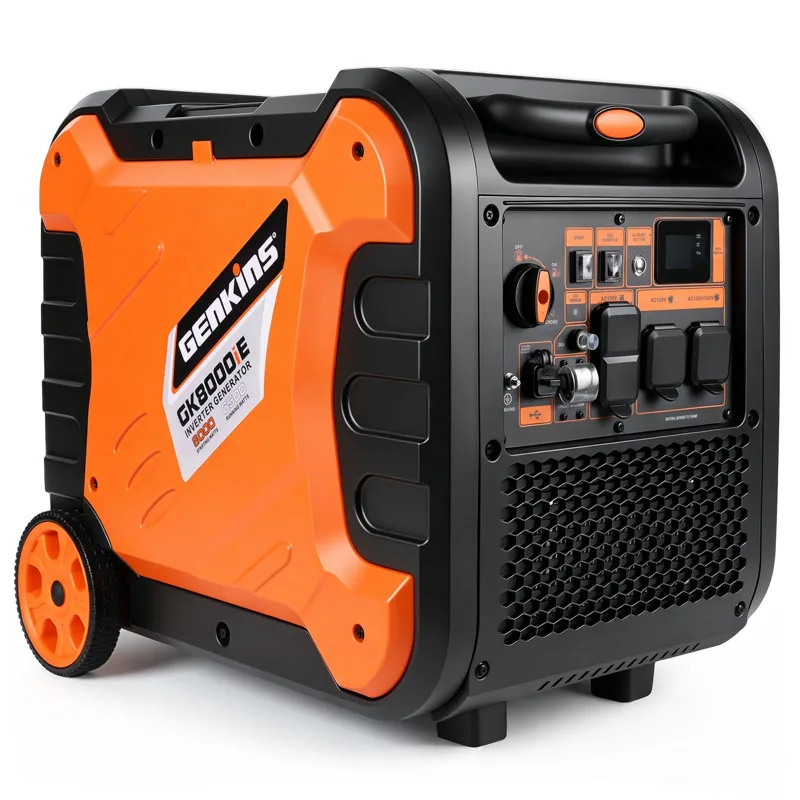
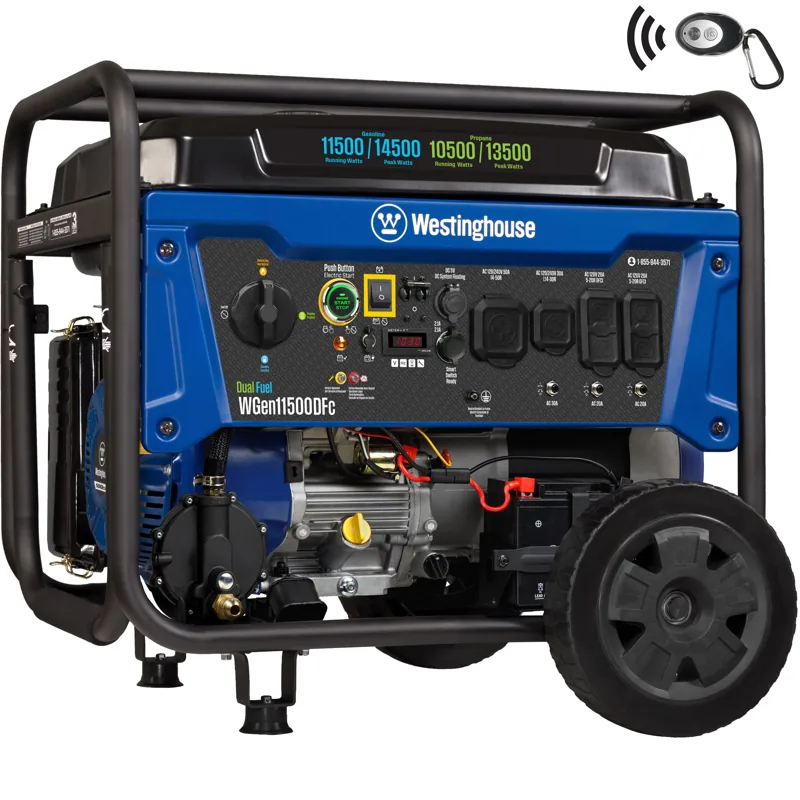
As an Amazon Associate we earn from qualifying purchases, at no extra cost to you.
The worksheet: three steps
- Add the running watts of everything that will run at the same time.
- Find the single largest starting load and add only its extra surge (starting watts minus running watts) once. Motors rarely start in the same second, and you can stagger them by switching loads on one at a time.
- Keep a margin: the total running load should stay at or below about 80% of the generator's rated watts for long runs.
Worked example (outage essentials):
- Fridge 700 W + chest freezer 600 W + 1/2 HP sump pump 1,050 W + lights 100 W + router 20 W + TV 150 W = 2,620 running watts.
- Largest surge: the sump pump, 2,150 - 1,050 = 1,100 extra watts.
- Peak need: 2,620 + 1,100 = 3,720 W of starting capacity, and 2,620 / 0.8 = about 3,300 rated watts.
A 3,500 W generator covers it with little room to spare; a 4,500 W class leaves space for a microwave or a coffee maker in turns.
Common size classes
| Goal | Running watts | Typical loads |
|---|---|---|
| Camping, tailgating, CPAP | 1,600-2,500 W | electronics, small fridge, fan |
| RV with one roof AC | 3,000-4,000 W | 13,500 BTU AC, microwave in turns |
| Outage essentials | 3,500-5,000 W | fridge, freezer, sump pump, lights |
| Essentials + well pump or furnace | 6,000-8,000 W | add a 240 V well pump, furnace blower, window AC |
| Most of the house | 9,000-12,000 W | well pump, furnace, kitchen, several circuits |
| Whole house with central AC | 12,000 W and up | often a standby unit is more practical |
A 1 HP well pump runs on 240 V, so you need a generator with a 240 V outlet (L14-30R or 14-50R) and a proper transfer switch; see the well pump picks. For running most circuits, the whole-house portable picks list the largest units.
Tricks that shrink the generator you need
- Stagger the big loads: run the microwave or the well pump when the space heater is off.
- Install a soft starter on a central or RV air conditioner: it can cut the starting surge by more than half.
- Prefer LED lighting and gas or propane appliances for cooking and water heating.
- Turn off unneeded circuits at the transfer switch or interlock so forgotten loads do not eat your margin.
Watch the fuel and the outlets
A bigger generator burns more fuel even at light load. A 9,500 W unit idling along at 1,500 W uses noticeably more gas per hour than a 3,500 W unit doing the same job. Size for your real peak, not for every appliance in the house; the runtime guide shows the fuel math.
Also check the outlets: a generator's total wattage is useless if you cannot get it out. Each 120 V 20 A outlet delivers at most 2,400 W, and a 30 A 120/240 V twist-lock about 7,200 W. Our home backup picks list outlet panels in each product card.
Our pick for this guide
- Best portable generator for home backup (68 models)
- Best 3500 watt generator (32 models)
- Best 7500 watt generator (19 models)
- Best generator for a well pump (62 models)
Frequently asked questions
How many watts do I need to run a refrigerator on a generator?
A full-size refrigerator typically runs at 600 to 800 watts but needs 1,800 to 2,200 watts for a moment when the compressor starts. A 2,000 W inverter can handle one fridge alone, with little room for anything else.
Will a 7,500 watt generator run a house?
It runs the essentials of most houses, including a 240 V well pump, furnace blower, fridge, freezer and lights, through a transfer switch. It will not run central air conditioning, an electric range and an electric water heater at the same time.
Do I add the starting watts of every appliance?
No. Add the running watts of everything, then add the extra starting watts of only the largest motor once. Starting the big loads one at a time keeps you within that budget.