
Parallel generators explained
Two small inverter generators linked together can do the work of one large unit while staying easy to carry. Here is how paralleling works, what it delivers and where it stops.
What paralleling means
Paralleling connects two inverter generators so that their outputs combine into a single power source. The inverters synchronize their sine waves (voltage, frequency and phase) so the two units share the load. Conventional open-frame generators cannot do this because their output is not electronically controlled.
The connection is made with a parallel kit: a short set of cables plus, usually, a small outlet box with one or more 120 V 20 A outlets and often a TT-30R (30 A RV) outlet. Some recent models use a single plug-in cable and put the combined outlets on one of the generators.
How much power you gain
The combined output is roughly the sum of both units:
| Pair | Combined running watts | Combined starting watts |
|---|---|---|
| Two 2,000 W class inverters (about 1,600-1,800 W running each) | 3,200-3,600 W | 4,000-4,400 W |
| Two 2,500-3,000 W class inverters | 4,000-5,000 W | 5,000-6,000 W |
| Two 3,500-4,500 W class inverters | 6,000-8,000 W | 7,000-9,000 W |
Each outlet still has its own limit: a 120 V 20 A outlet delivers 2,400 W at most, and a TT-30R about 3,600 W. Plan the combined load against the outlet you will actually use.
Same model or compatible models?
- Same model: the safest and most common setup; always supported when the model is parallel-capable.
- Different models from the same brand: often supported within a brand's lineup (a small unit with a larger one, for example). The manual lists the compatible models.
- Different brands: generally not supported. Some generators may sync, but the manufacturer will not guarantee it and it can void the warranty. Assume cross-brand pairing is off the table unless both manuals explicitly allow it.
Always use the parallel kit designed for your model, and follow the connection order in the manual.
Our picks for this guide
The highest-rated models in our comparison for this topic.
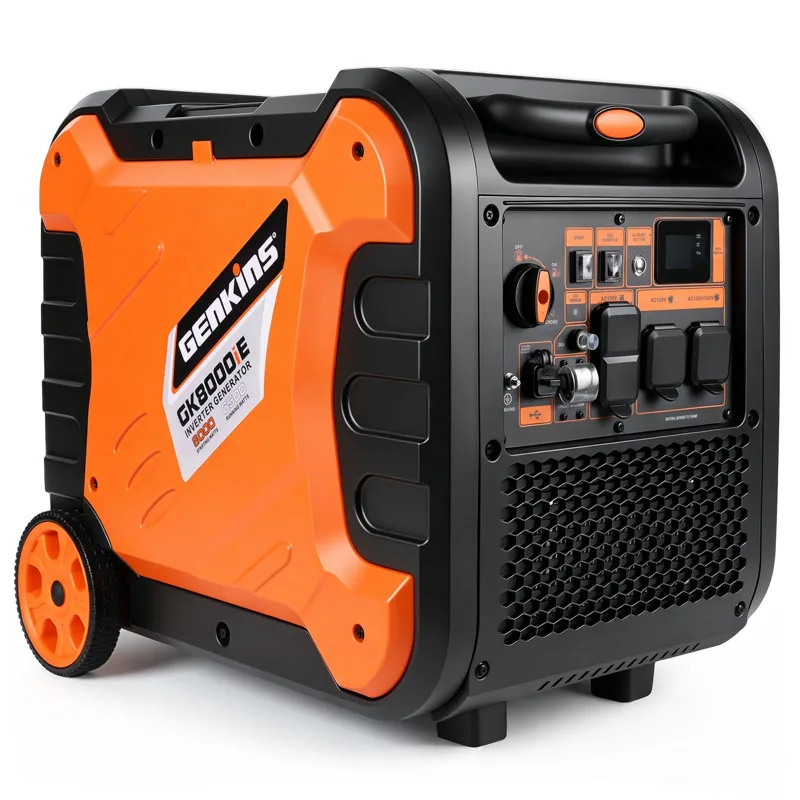 Genkins GK8000iE 8000W Inverter
8.2/10 · $500–$800
6,500 running W · Gas inverter
CO shutoff
Check price
Read the review →
As an Amazon Associate we earn from qualifying purchases, at no extra cost to you.
Why choose two small units over one big one
- Portability: each 2,000 W class inverter weighs about 40-50 lb, versus 90-120 lb for a single 3,500-4,500 W inverter. Two people are not needed to lift the pair.
- Flexibility: run one unit for light loads (fridge, lights, CPAP, phone charging) and add the second only for the air conditioner or the microwave. One small unit at light load sips fuel.
- Redundancy: if one unit needs service, you still have power.
- Quiet operation: two small inverters at light load can be quieter than one large unit working hard.
The RV 30 amp setup
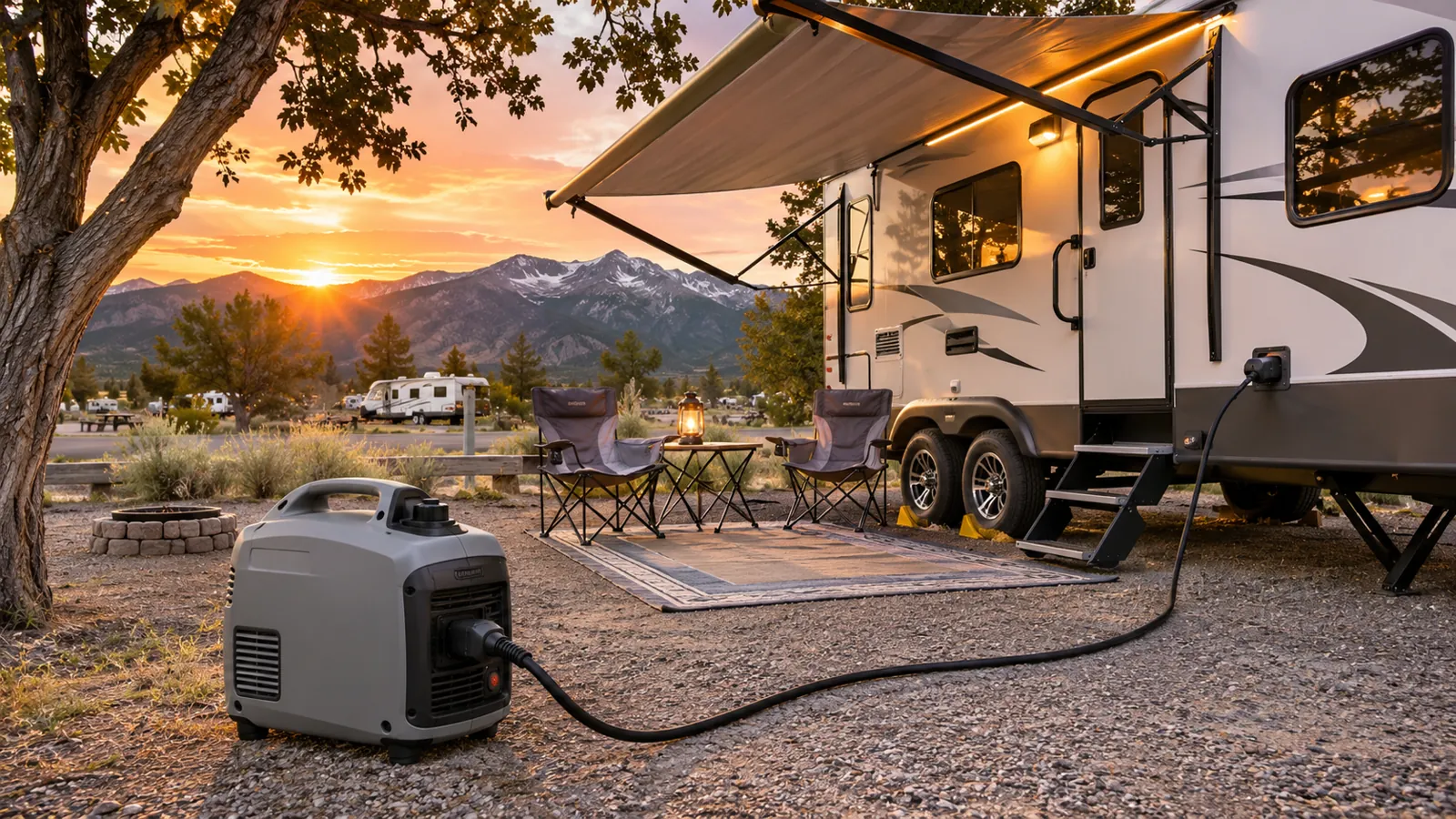
The classic use: two 2,000-2,500 W class inverters with a parallel kit feeding a 30 A RV through the TT-30R outlet. Together they deliver up to about 3,600 W, the full capacity of a 30 A service, enough to start and run a 13,500 BTU roof AC plus the fridge and lights. Add a soft start kit on the AC and a single unit may handle it in mild weather. See the RV sizing guide and the RV picks.
The limits
- 120 V only, in most cases: most parallel kits on small inverters deliver 120 V only. You cannot run a 240 V well pump or feed both legs of a 240 V transfer switch with them. Some larger inverters offer 240 V parallel operation, but check the specs.
- Not a 50 A solution for small units: two small inverters cannot power the full 50 A, 120/240 V system of a large RV.
- Two engines to maintain: twice the oil changes, spark plugs and fuel management. See the maintenance guide.
- Cost: two small inverters plus a kit often cost more than one open frame of the same combined output, and sometimes about the same as one mid-size inverter.
- Both units must sit outdoors, at least 20 feet from the house or the RV's windows, doors and vents, exhaust pointed away. Two generators produce twice the carbon monoxide; see the safety guide.
- Home backup: a pair of small inverters can run essentials on cords, but connecting a parallel kit to house wiring requires a transfer switch or interlock compatible with its outlet, installed by a licensed electrician.
Connecting a parallel pair, step by step
- Place both generators on level ground outdoors, close enough for the short parallel cables.
- Make sure both are off, with their breakers off, and connect the parallel cables or kit as the manual describes.
- Start both generators; switch both to the same eco mode setting if required.
- Plug the load into the kit's outlets and turn loads on one at a time, largest motor first.
- To stop, remove the loads, then shut down both units.
Is paralleling right for you?
| Situation | Parallel pair | One larger unit |
|---|---|---|
| 30 A RV with one AC | strong fit | good fit |
| Camping, mostly light loads | strong fit | heavier to carry |
| 240 V home backup, well pump | rarely | better |
| Tight budget, maximum watts | weaker | open frame wins |
Parallel-capable models are listed in the parallel inverter picks and the 2,000 W class; compare them in the comparison tool.
Our pick for this guide
- Best parallel capable inverter generator (98 models)
- Best 2000 watt generator (24 models)
- Best generator for RV (84 models)
- Best inverter generators (120 models)
Frequently asked questions
Can I parallel two different generator brands?
Generally no. Manufacturers support parallel operation only between their own compatible models, using their own kit. Mixing brands is not guaranteed to work and can void the warranty.
Do two 2,000 watt generators make 4,000 watts?
They make the sum of their running ratings, which for 2,000 W class units is typically 3,200 to 3,600 running watts. The 2,000 W figure on the box is usually the starting rating.
Can parallel generators run a 30 amp RV?
Yes, that is their most popular use. A parallel kit with a TT-30R outlet delivers up to about 3,600 W, enough for a 13,500 BTU roof AC and the usual RV loads.